
These short posts on crafts in the Pale of Settlement can only hint at the level of skill and knowledge of craftspeople in the shtetls prior to the second world war. Aside from textiles and baskets, handmade pottery and earthenware products could be found everywhere. These dishes, pots and utensils were fundamental for cooking, serving and storing food, drinks and medicine. Every household used these wares, and many villages had potters or traded in earthenware. As noted by art historian Giza Frankel in the 1970s, this craft has been very poorly documented with regard to the Jews of the Pale. However, many yizkors mention potters and their trade as part of the local economy.
Here is a sampling of excerpts from yizkor memory books that mention pottery, earthenware and potters:
https://www.jewishgen.org/yizkor/pinkas_lita/lit_00168.html ("Liba Bik, who owned a pottery workshop")
https://www.jewishgen.org/yizkor/lithuania5/lit5_152.html ("Salok was known for its pottery production")
https://sztetl.org.pl/en/towns/t/1025-toporow/99-history/138163-history-of-community ("In the 19th century, many Jews in Toporów were involved in the production and export of pottery, for which the town was famous.")
https://kehilalinks.jewishgen.org/Buki/my_village.pdf ("Not far from the Katzapes is the pottery display with earthen pots, mache, bowls, large and small, pitchers, jars, dishes and noodle dishes. The bowls are glazed inside with beautiful flowers. Some are plain, others are etched. Near the pottery, you hear the clanging of buyers, trying out the merchandise.")
https://www.jewishgen.org/yizkor/ostrowiec/ost213.html ("At that time, in Ostrowiec, they would place the kugel into the cholent in an earthenware pot, which was then called “kugel sharben” [kugel earthenware pot]. This pot was narrow at the bottom and wide at the top.
https://www.jewishgen.org/yizkor/pinkas_poland/pol2_00253.html ("In the 19th and 20th centuries, the town was noted for its production of earthenware vessels, which were also provided to other towns. From earliest times the Jews of the area were permitted to carry out various trades, selling and inn-keeping. In the 19th century many were employed in making and supplying earthenware vessels to the surrounding area.")
https://www.jewishgen.org/yizkor/pinkas_lita/lit_00240.html ("The earthenware industry was in the hands of Jewish artisans.")
https://www.jewishgen.org/yizkor/pinkas_poland/pol3_00073.html ("The Jews of Brzostek earned their livelihood from small-scale commerce and peddling, particularly with the products for which the town was known (earthenware and shoes), as well as through their participation in the local fairs.")
https://www.jewishgen.org/Yizkor/Lyubcha/lyu188.html#Page194 ("And the earthenware jars, set aside, of butter milk and sour cream, the sour liquid which remains in the barrel after butter is churned...")
a few Yiddish terms:
טעפּערשע = tepershe = pottery
טעפּער = teper = potter
טאָפּ = top = pot
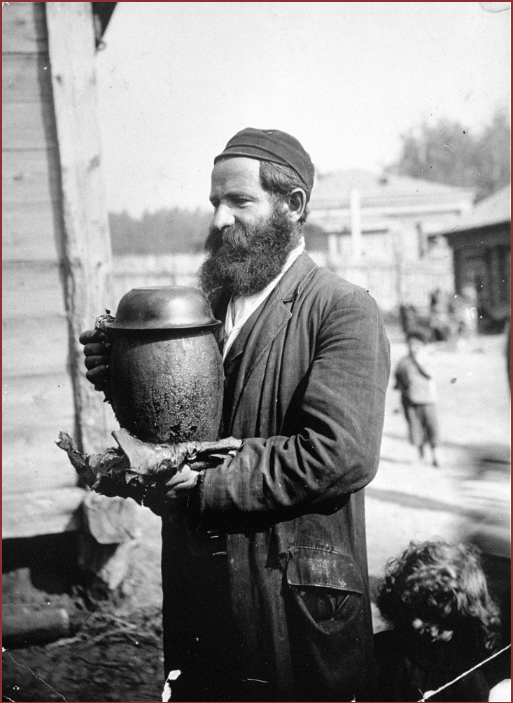
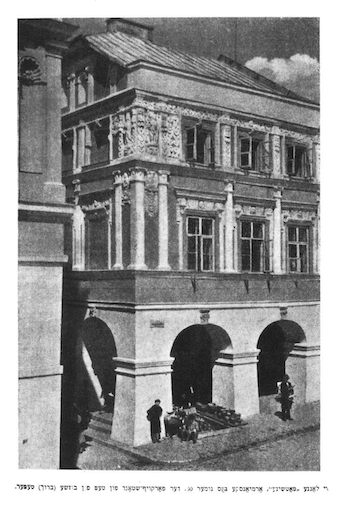
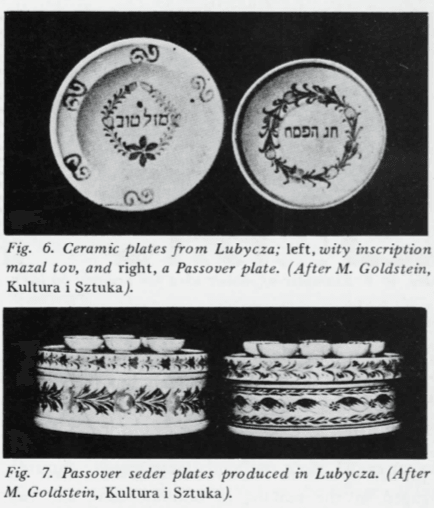
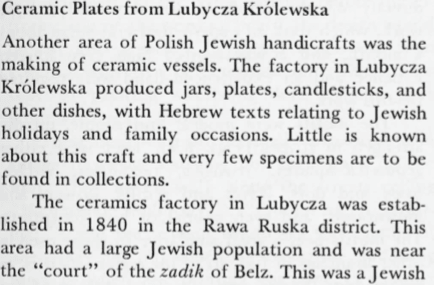
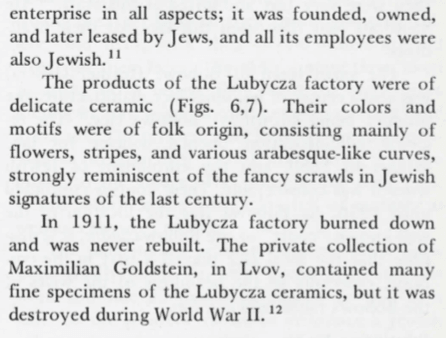
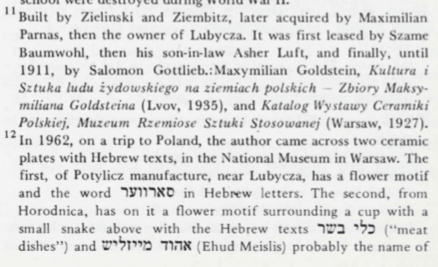

photo sources:
Jewish boys selling pottery in Opatov or Opatow, Poland (https://encyclopedia.yivo.org/media/710)
Man bringing a pot of cholent to the baker's oven in Poland 1930s (https://encyclopedia.yivo.org/media/973)
Potter selling their wares in a street off the main market square in Zamosc, Poland
Ceramic ware from Lubycza, Poland from the article "Little Known Handicrafts of Polish Jews" by Giza Frankel in the Journal of Jewish Arts, 1975
