
To honor the current holiday of Shavuot, I'd like to share a few quotes from the memoir of writer Israel Joshua Singer (I. J. Singer (1893-1944) ) followed by my notes on the plants he mentions in these excerpts.
Of A World That is No More (פֿון א וועלט וואס איז נישטא מער / Fun A Velt Vos Iz Nishto Mer), was published in Yiddish in 1946. and tells of Singer's boyhood in the small Polish town of Leoncin. While originally planned as a three volume autobiography I. J. Singer passed away before completing it. This first volume covers his life from the age of two until his family moved from Leoncin.
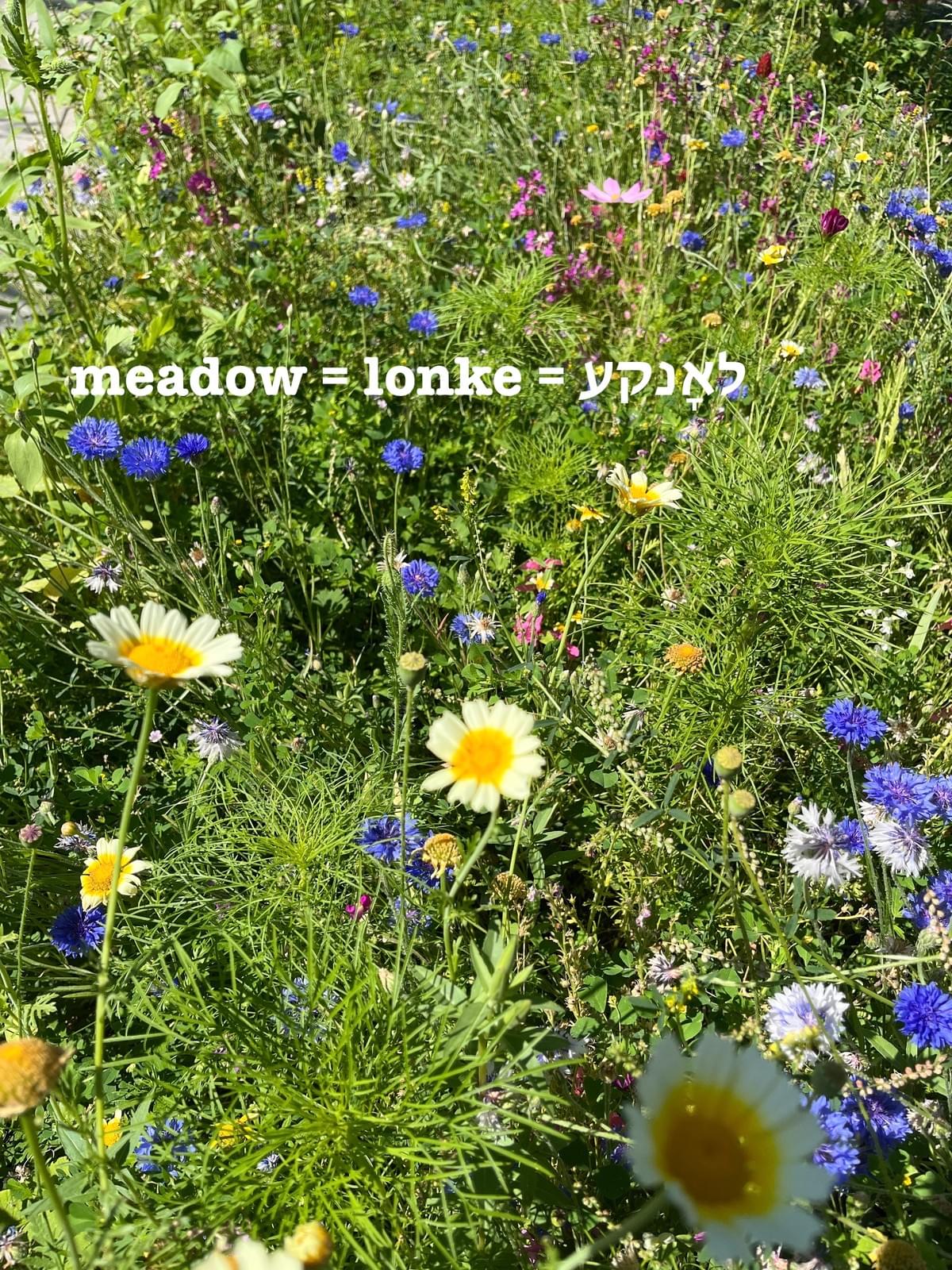
The prose, even in the English translation, is beautiful and just as evocative as his younger brother's (the author Isaac Bashevis Singer) works, especially when he recounts the lush meadows around Leoncin where he found both adventure and solace in a world that is no more:
on p. 14 of the English translation:
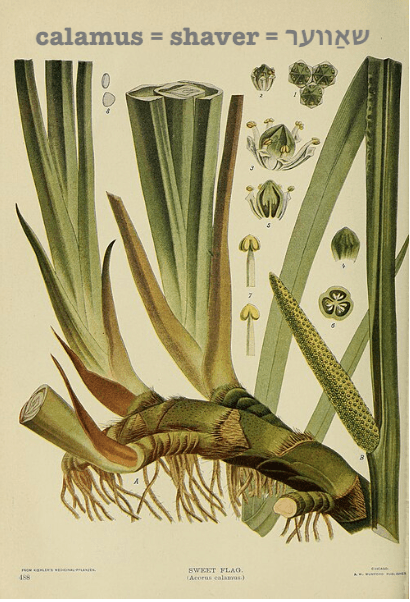
"The house of worship and the ritual bath were located near a meadow where cattle and horses grazed and near a pond, more mud than water, where ducks swam and the animals drank. The frogs in this bog, so densely overgrown with water flag (calamus = shaver = שאַװער), used to rend the heavens with their croaking."
shaver = שאַװער = Shaver = Calamus acorus
(My plant notes: The reedy Calamus grows in marshy places such as the bogs Singer mentions in the excerpt from his memoir on p. 14 above. We include a monograph of Calamus or שאַװער in our book, Woven Roots, where we list the many, many Yiddish names for this plant in addition to שאַװער. Calamus must have held an important role for Ashkenazim and others in the region, especially considering its affinity for the digestive system.
Current herbal wisdom looks to calamus as a bitter that can help calm the body and bring it from a fight-or-flight mode into the more relaxed rest-and-digest state. As we write in Woven Roots, good digestion was a sign of good health in the shtetls. It's not surprising that I. J. Singer would have easily recognized the elegant reeds growing throughout the marshy patches in the meadows remembered from his youth. )
On p. 40 of the English translation: "The meadow was broad, trampled flat and cropped close by grazing animals, befouled by the dung of horses, cows, goats, and geese. But it was also bright with sunlight, sprinkled with yellow and white wild flowers, briars, weeds that we used to call "crazy kasha," (meshugene kashe = משוגענע קאַשע) grasses that contained a kind of cottony substance, and plants of every shape and color."
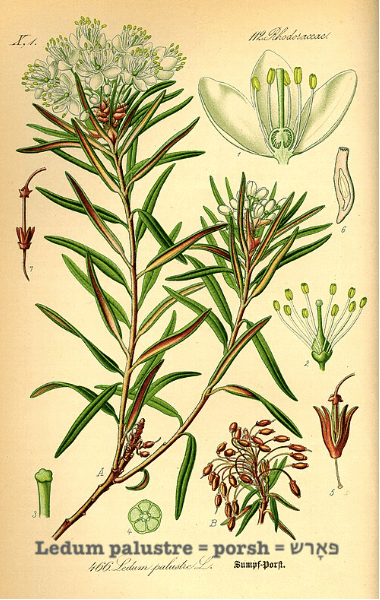
Meshugene kashe = משוגענע קאשע = crazy kasha
(My plant notes; My guess is Singer is writing about porsh = פּאָרש = Marsh Labrador Tea. Mortkhe Schaechter in his work, Plant Names in Yiddish tells us that "Crystaltea" was known as פּאָרש or porsch or Ledum palustre or Marsh Labrador Tea. This plant grows in the boggy areas of Poland. While it does have a long history as a medicinal plant, it's also known to cause dizziness and disturbances in movement when taken in large doses. Maude Grieve in her classic work, A Modern Herbal, writes of Ledum palustre: it "grows in swamps and wet place of Northern Europe, Asia and America and on the mountains of southern districts. The leaves are reputed to be more powerful than those of L. latifolium and, in addition to some narcotic properties, have been used in Germany to make beer more intoxicating.")
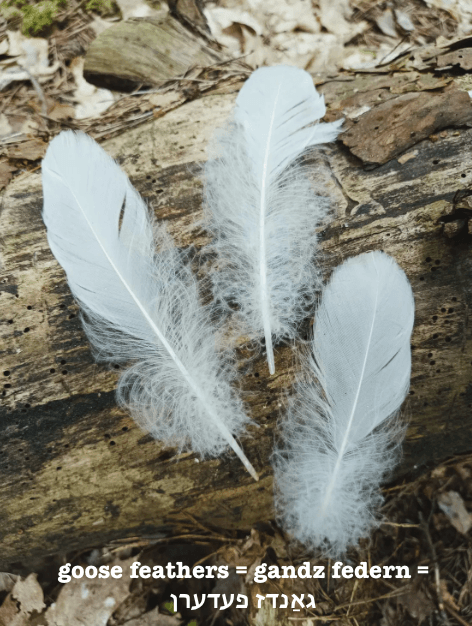
On p. 41 of the English translation: "Great gaggles of geese fed in the meadow, at the same time, molting their feathers."
This passage brings to mind another memoir, this time in a yizkor recollecting life in the shtetl of Trashkun, Lithuania, where goose feathers would be gathered in the meadow while waiting for freshly washed laundry, spread over the field, to dry in the sun: https://kehilalinks.jewishgen.org/troskunai/
.
You can find the English translation of Singer's Of A World That Is No More here.
